Schedule a home inspection on new construction at up to four points in the build: before the foundation concrete is poured, after the rough-ins but before drywall goes up, one to two weeks before closing, and around the 11-month mark before the builder’s warranty expires. Each of those four points is tied to a construction milestone rather than a date on a calendar, which is why timing a new construction inspection is harder than timing one on a resale. The milestone moves, the window is short, and once drywall covers the framing the chance to look is gone for good. Below we define each phase, map them onto a realistic build schedule, explain why the builder’s own code inspections do not take the place of yours, and cover what happens when something turns up.
When Should You Schedule a Home Inspection for New Construction?
You should schedule a home inspection for new construction at four construction milestones rather than once at the end. Milestones drive the schedule because each one exposes something the next one covers up. A pre-pour inspection sees the footings and vapor barrier that concrete will bury. A pre-drywall inspection sees the framing, wiring, plumbing, and ductwork that insulation and sheetrock will hide. A final inspection sees the finished systems in operation. An 11-month inspection sees what a year of living in the house revealed.
Revealed problems are common enough to plan for. Industry survey data shows more than half of new construction buyers find issues with the home after moving in, and 86% of home inspections of any kind reveal at least one item needing attention. New does not mean finished correctly, and it never has. Our inspection services cover new builds the same way they cover existing homes, with over 400 components examined against InterNACHI’s Standards of Practice.
Does New Construction Need a Home Inspection?
New construction needs a home inspection, and the reasons have nothing to do with the builder’s competence. Competence is not the variable. Homes go up under tight deadlines, with multiple subcontractors handing work to one another, and a crew that frames on Tuesday may never see what the electrician does on Thursday. Communication gaps between trades produce most of what inspectors find on new builds.
Builds also finish faster than many buyers expect, which compresses every opportunity to look. The U.S. Census Bureau’s Survey of Construction puts the 2025 national average at 8.8 months from authorization to completion, broken into 1.4 months waiting to start and 7.4 months of actual construction. Buyers who want the longer argument can read our take on inspecting brand-new homes before they commit to a build.
How Many Inspections Should You Get on a New Build?
The number of inspections you should get on a new build depends on whether you are buying a production home, a spec home, or a custom build. Custom builds justify all four phases, because you control the schedule and have the longest exposure to workmanship decisions. Production builds in a subdivision usually justify three: pre-drywall, final, and the 11-month warranty inspection.
Warranty inspections aside, a spec house that is already standing finished needs one inspection, the same as any existing home, because nothing is left to see in stages. Census data shows homes between 1,200 and 3,999 square feet average about 9 months to build, while homes over 6,000 square feet average 16.3 months from permit to completion, and a longer build simply gives more opportunities for a phase inspection to pay for itself.
What Are the Four New Construction Inspection Phases?
The four new construction inspection phases are the pre-pour inspection, the pre-drywall inspection, the final inspection before closing, and the 11-month warranty inspection. Each phase inspects what is visible at that moment and nothing else, which means a missed phase is not a delayed inspection but a permanently lost one. Lost access is the entire reason these phases exist as separate appointments.
The timing figures below reflect the Census Bureau’s construction timeline data, the standard one-year builder warranty period, and the walkthrough sequence most builders follow in the final weeks before closing.
| Phase | When it happens | What is visible then | What is lost if skipped |
|---|---|---|---|
| Pre-pour | After excavation and forming, before the concrete truck arrives | Footings, trenches, rebar and tension cable placement, vapor barrier, under-slab plumbing, grading and drainage | Everything under the slab, permanently. Correcting it later means breaking concrete |
| Pre-drywall | After framing and the electrical, plumbing, and HVAC rough-ins, before insulation and drywall | Framing, fasteners and connectors, wiring runs, supply and drain lines, ductwork, window and wall flashing | Every system inside the walls. Access returns only through demolition |
| Final before closing | 1 to 2 weeks before closing, ideally 48 hours before the blue tape walkthrough | Finished systems in operation, appliances, fixtures, roof and exterior, grading, interior fit and finish | Leverage. After closing, requests become warranty claims instead of punch list items |
| 11-month warranty | Around month 11 of a one-year builder warranty | Settlement cracks, door and window alignment, drainage performance, HVAC performance after a full season cycle | Warranty coverage. Repairs found at month 13 come out of your pocket |
Pocket costs in that last column are what make the warranty inspection worth calendaring the day you close. Each of the four phases is examined more closely below.
What Is a Pre-Pour Inspection?
A pre-pour inspection is an evaluation of the foundation preparation before the concrete is poured. Poured concrete is permanent, which gives this phase the narrowest window and the highest stakes of the four. The inspector reviews elevation, grading, and drainage around the pad, confirms trench and footing widths, checks that rebar or post-tension cables are positioned and tied correctly, verifies plastic vapor barrier placement, and confirms that under-slab plumbing sleeves and water lines are set where the plans show them.
Plans and field conditions diverge more often than buyers assume, particularly on sloped lots. Drainage that pitches toward the house rather than away from it is simple to correct before the pour and expensive to correct afterward.
What Is a Pre-Drywall Inspection?
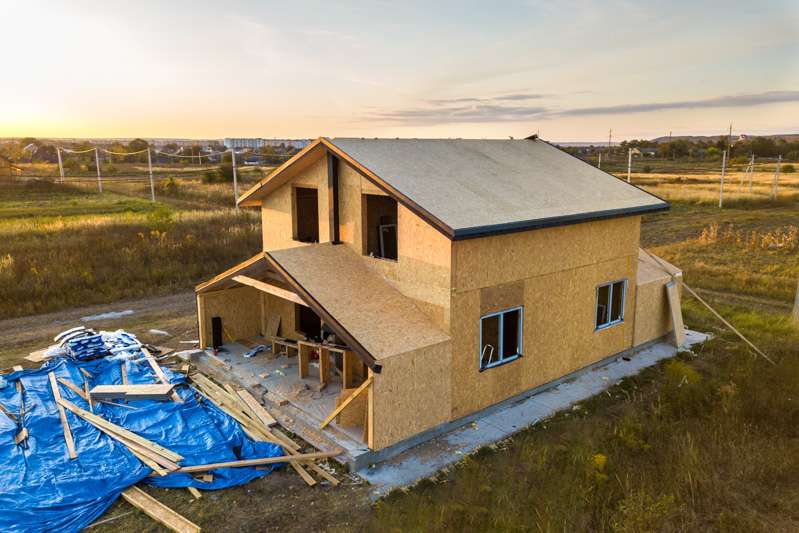
A pre-drywall inspection examines a new home’s structure, systems, and components after the rough-ins are installed but before insulation and drywall cover the framing. Covering happens quickly once the drywall crew is scheduled, which is why this phase has a reputation for being the easiest one to miss. We provide a pre-drywall inspection that identifies potential issues while they remain accessible, which prevents costly repairs later.
Later repairs are the expensive kind because the only route back to a wire or a pipe inside a finished wall is through the drywall. At this stage the inspector checks framing alignment and structural soundness, the condition of the lumber itself, fasteners, connectors, and bolts, exterior walls and window installations, HVAC rough-ins, and the exterior electrical, mechanical, and plumbing runs. Our detailed treatment of why this phase matters on new home builds walks through what typically turns up.
When Should the Final Inspection Happen Before Closing?
The final inspection should happen one to two weeks before closing, and ideally about 48 hours before your blue tape walkthrough. Walkthroughs go better when you arrive with a written report rather than a flashlight and good intentions. By this point every appliance, fixture, and mechanical system should be installed and operating, which is what makes the appointment meaningful.
Meaningful findings at this stage become punch list items the builder corrects before you take ownership. A blue tape walkthrough is the builder’s own orientation visit, named for the tape buyers use to flag cosmetic defects on walls and trim, and it is normally scheduled in the final week. Running the independent inspection first means your tape goes on the things that actually matter.
What Is an 11-Month Warranty Inspection?
An 11-month warranty inspection is a full inspection performed near the end of a one-year builder warranty, timed to catch defects while the builder is still obligated to fix them. Obligation is the operative word, because most builder warranties on workmanship and materials run exactly twelve months from closing. Scheduling at month eleven leaves a few weeks to submit findings and get them addressed.
Addressed items at this stage are usually things a year of occupancy exposed: settlement cracking at drywall corners, doors and windows falling out of alignment as framing dries, drainage that works in light rain and fails in heavy rain, and heating or cooling performance that only shows up after a full season cycle. A follow-up re-inspection after the builder completes those repairs confirms the work was done properly.
How Do You Time Inspections Against the Build Schedule?
You time inspections against the build schedule by mapping each phase onto the construction calendar and asking the builder’s site superintendent to give you advance notice at each milestone. The superintendent is the only person who reliably knows when the concrete truck or the drywall crew is coming, and most will give you a few days’ notice if you ask at the start rather than at the end. Asking early is what separates buyers who get their phase inspections from buyers who get a phone call the morning of.
Morning-of calls are the common failure mode, and they are avoidable. With a national average of 7.4 months of actual construction, a buyer who sets this up at contract signing has plenty of runway. We handle new construction inspections for buyers building across Mid-Missouri, and the booking pattern that works looks like this:
- At contract signing, tell the builder you intend to use an independent inspector and ask what their process is for scheduling site access.
- Ask the site superintendent for advance notice at two specific milestones: foundation forming complete, and rough-ins complete.
- Choose your inspector early and confirm they handle phase inspections rather than finished homes only.
- Put a provisional hold on the pre-pour and pre-drywall dates as soon as the build schedule firms up.
- Confirm the appointment the moment the superintendent calls the milestone, since these windows run days rather than weeks.
- Book the final inspection as soon as a closing date is set, targeting one to two weeks out.
- Put the 11-month inspection on your calendar the week you close, before anything else fills that month.
Filling that eleventh month with anything other than an inspection is the most common warranty mistake new homeowners make.
How Do You Know When the Pre-Drywall Stage Is Coming?
You know the pre-drywall stage is coming when the framing is complete and the electrical, plumbing, and HVAC rough-ins have passed their municipal inspections. Inspections at the municipal level are a reliable signal, because drywall cannot legally go up until the rough-in inspections clear. Ask your superintendent to tell you when the rough-in sign-offs are scheduled and you have your warning.
Warning time is usually short regardless. On production builds the drywall crew often arrives within a few days of the rough-in sign-off, so a buyer who waits for the house to “look ready” has already missed it. Driving past the site weekly during framing is a reasonable backup to the superintendent’s notice.
Do You Do a Home Inspection Before or After Making an Offer?
On new construction you make the offer first and inspect afterward, because there is usually nothing standing to inspect at the time of the offer. Offers on a build are signed against plans and a lot, and construction starts after the contract. That sequence is the reverse of a resale, where a buyer walks a finished house before writing.
Writing early also means the inspection contingency works differently here. On a spec house that is already complete, the normal sequence applies and the inspection follows acceptance inside the contingency period, the same as it would for any existing home purchase. Buyers in that position are really scheduling a standard buyers inspection rather than a phase inspection.
Can You Get a New Construction Inspection on a Spec Home?
You can get a new construction inspection on a spec home, and for a finished spec house one thorough inspection is normally enough. Enough depends on how far along the house is when you find it. A spec home still under construction can still receive a pre-drywall inspection if you get under contract before the drywall goes up.
Going up is the dividing line. A spec home that is already complete gets the same treatment as any existing property, with the added note that nobody has lived in it long enough to discover anything, which makes the inspection more valuable rather than less.
Do Code Inspections Replace a Private Home Inspection?
Code inspections do not replace a private home inspection, because the municipal inspector works for the jurisdiction rather than for you. A code inspection confirms the house meets the adopted building code. It does not confirm the house matches your contract, your floor plan, or any standard of workmanship above the legal minimum. Minimums are the whole scope of that review.
Review scope aside, the municipal inspector also issues no report to you. The record goes to the permit file and the builder, and the certificate of occupancy that results tells you the house is legal to live in, not that it is free of defects. A staircase can meet code on rise and run while an outlet twenty feet away is miswired, and the code inspector has no reason to look at the outlet.
Looking at the things nobody is obligated to look at is what an independent inspection buys, which is the case we lay out for whether a new construction inspection is worth it on a house that has never been lived in.
Can a Builder Deny a Home Inspection?
A builder can set conditions on a third-party inspection, and most reputable builders welcome one. Welcoming it is the norm because a builder confident in the work has nothing to lose by having it reviewed. Conditions builders commonly impose are practical rather than obstructive: proof of the inspector’s liability insurance, a scheduled time rather than a drop-in, and a superintendent present to escort visitors around an active job site.
Active job sites carry real safety obligations, which is where most of those rules come from. A builder who refuses any independent inspection outright is a different situation, and buyers in that position should check what their purchase contract says about inspection rights before agreeing to anything further.
What Should You Look For in a New Construction Home Inspection?
In a new construction home inspection you should look for installation errors, incomplete work, and drainage problems rather than wear and deterioration. Deterioration has not had time to happen in a house that is weeks old, which makes new construction findings a different category from resale findings entirely. What turns up varies by phase:
- At pre-pour: improper grading, undersized footings, misplaced rebar or tension cables, torn or missing vapor barrier, and under-slab plumbing set off plan
- At pre-drywall: missing framing connectors, wiring in contact with metal plates, unsupported or improperly sloped drain lines, crushed or disconnected ductwork, and missing window or wall flashing
- At the final: non-functioning outlets, plumbing leaks under sinks and at water heaters, HVAC systems not calibrated or balanced, missing insulation, poorly installed roofing and flashing, and grading that drains toward the foundation
- At 11 months: settlement cracking, door and window misalignment, drainage failures in heavy rain, and heating or cooling shortfalls that only appear seasonally
Seasonal shortfalls deserve their own note, since many of them trace back to work that was never visible at the pre-drywall stage. Every inspection we perform includes thermal imaging and moisture meter testing at no extra cost, which is particularly useful on new builds for finding insulation gaps behind finished walls.
What Are Common Problems Found in New Construction Homes?
The most common problems found in new construction homes are improper wiring, missing insulation, plumbing leaks, poorly installed roofing materials, uncalibrated HVAC systems, and drainage issues. Drainage leads that list on a surprising number of new lots, because final grading often happens last and sometimes happens in a hurry.
Hurried finish work also explains why insulation gaps are so frequent. Missing or compressed insulation drives uneven room temperatures and higher energy bills without ever producing a visible symptom, which is the same pattern we see in older homes with attic insulation problems.
Problems on the roof follow a similar logic, since a brand-new roof installed incorrectly shows no symptoms until water finds its way in. Misaligned shingles and improper flashing around chimneys and vents produce the same eventual outcome as the warning signs of a failing roof on a house decades older.
Does a New Build Need a Radon Test?
A new build needs a radon test, because radon enters through the foundation regardless of how old that foundation is. Foundation age has no bearing on soil gas. The Missouri Department of Health reports that 1 in 3 Missouri homes tested exceed the EPA action level of 4 pCi/L, and the EPA estimates radon causes about 21,000 lung cancer deaths annually in the United States.
Annual exposure starts the day you move in, which is why the test belongs in the final inspection window rather than after closing. The EPA’s short-term testing protocol requires a minimum 48-hour measurement period under closed-house conditions, so radon testing has to be booked alongside the final inspection rather than tacked on at the last minute. Rural builds across Mid-Missouri often need well water and septic evaluations in the same stretch of days.
How Long Does a New Construction Home Inspection Take?
A new construction home inspection takes 2 to 4 hours for a typical single-family home, and a three-hour inspection is completely normal. Normal duration tracks square footage, system count, and how much of the house is finished. A pre-pour or pre-drywall visit often runs shorter than a final inspection, because fewer systems are operable and there is less to test.
Testing time is what stretches the final appointment. Every outlet, fixture, appliance, and mechanical system gets operated, and on a larger home that alone fills a couple of hours. We deliver the written report within 24 hours of either visit, which matters more on a build than a resale because a pre-drywall finding has to reach the builder before the drywall crew does.
What Happens If the Inspection Finds Problems?
If the inspection finds problems, the findings become a punch list the builder works through before closing. Finding issues on a new build is the expected outcome rather than a sign that something has gone wrong. Wrong assumptions on this point cause more buyer anxiety than the defects themselves.
Themselves aside, the timing of the finding determines how easy the fix is. A framing issue caught at pre-drywall is corrected by a carpenter in an afternoon. The same issue found after closing is a warranty claim, a scheduling negotiation, and a repair performed around your furniture.
What Happens If the Builder Will Not Fix the Issues?
If the builder will not fix the issues, your options depend on what your purchase contract says about inspection rights and pre-closing corrections. Corrections before closing give you the most leverage you will ever have, because the builder still needs your signature. Most disagreements resolve at this stage without escalation.
Escalation beyond that usually means documenting the findings in writing, submitting them through the builder’s formal warranty process, and keeping the inspection report and photographs on file. Buyers facing a flat refusal on a significant structural or safety item should talk to their agent and, where the amount warrants it, to an attorney.
Do You Lose Earnest Money If an Inspection Fails?
You do not lose earnest money when an inspection finds problems, because an inspection does not pass or fail a house. Houses are not graded. The inspector documents conditions and the report goes to you, and what happens next depends entirely on the terms written into your purchase agreement.
Agreements on new construction often read differently from resale contracts, with builder-drafted terms covering deposits, construction delays, and change orders. Read those terms before the build starts rather than after a finding, since deposits on a build are frequently larger than typical earnest money and the conditions for returning them are spelled out in the contract itself.
Do You Need an Inspection If the Home Is Under Warranty?
You need an inspection even when the home is under warranty, because a warranty covers repairs you identify and report rather than repairs nobody notices. Noticing is the homeowner’s job under every builder warranty, and the clock runs whether or not anyone is looking. A defect that surfaces at month fourteen is yours.
Yours by default is exactly the outcome the 11-month inspection exists to prevent. The warranty is a reimbursement mechanism with a deadline, not a guarantee that the house is free of defects.
How Does the Missouri Contract Affect New Construction Timing?
The Missouri contract affects new construction timing by holding the buyer to the same inspection deadlines that apply on a resale purchase. Missouri’s standard Residential Sale Contract sets the Inspection Period at 10 days from the Effective Date when the blank is left unfilled, and states that time is of the essence with calendar days and no grace period. Grace periods do not exist in that contract, which surprises buyers who assume a build’s long timeline buys them flexibility.
Flexibility has to be written in rather than assumed. Buyers purchasing a finished spec home in Mid-Missouri are working inside that 10-day window exactly as they would on an existing house, which means the inspection, the report, and any written response all have to land inside it. Buyers building from the ground up are usually working from a builder’s own contract instead, with its own deadlines for walkthroughs and corrections, and those deserve the same close reading. Our overview of the state’s Missouri requirements covers what applies to residential transactions generally.
Frequently Asked Questions
How Long Do Home Inspections Take for a 1500 Sq Ft House?
A home inspection on a 1,500 square foot house takes about 2 to 3 hours. Smaller homes have fewer systems to operate and less square footage to cover, so they land at the shorter end of the typical 2 to 4 hour range. Crawl space access, the number of heating systems, and whether outbuildings are included all push the number up.
What Is the Biggest Red Flag in a Home Inspection?
On a new build, the biggest red flag in a home inspection is a foundation or structural issue, followed closely by grading that drains toward the house. These are the findings that cost the most to correct and that signal broader quality problems with the work. Improperly installed plumbing and electrical systems rank just behind them, since both are hidden inside walls once drywall goes up.
Who Pays for a New Construction Home Inspection?
The buyer pays for a new construction home inspection, because the buyer orders it and receives the report. This holds across all four phases. The builder has no obligation to arrange or fund an independent inspection, and the municipal code inspections the builder does pay for produce no report the buyer receives.
Can the Pre-Drywall and Final Inspections Be Done by the Same Inspector?
The pre-drywall and final inspections can and should be done by the same inspector. An inspector who saw the framing and rough-ins knows what is behind the finished walls and can check at the final visit whether earlier findings were actually corrected. Continuity between visits is one of the practical advantages of booking phase inspections with one company.
What Is a Blue Tape Walkthrough?
A blue tape walkthrough is the builder’s orientation visit shortly before closing, where the buyer marks cosmetic defects with blue painter’s tape so crews can find and correct them. It covers paint, drywall finish, trim, flooring, and similar surface items. A blue tape walkthrough is not an inspection and does not examine structure, systems, or safety.
The Bottom Line
Schedule a new construction inspection at up to four points: before the foundation pour, after the rough-ins but before drywall, one to two weeks before closing, and around month eleven of the builder’s warranty. Each phase sees something the next one hides, so a skipped phase is not postponed but lost. The pre-drywall window is the tightest of the four and the one buyers miss most often, which makes advance notice from the site superintendent the single most useful thing to arrange at contract signing.
Signing is also the moment to put the eleventh month on your calendar, before a year of living in the house makes it easy to forget. Code inspections will confirm your home is legal to occupy, and nothing more than that. If you are building anywhere in Mid-Missouri and want an independent set of eyes at the stages that count, ARC Home Inspections is glad to help. Call us at 314-948-3058 and we will work your inspections around the build schedule.