A mold inspection is accurate at finding moisture and visible growth. A lab air test is only a short snapshot of 1 room. The EPA says no federal limits exist for mold, so no number proves a home safe. Accuracy rises when an inspector combines visual checks, moisture readings, and lab samples. A clean result alone still leaves questions.
Key Takeaways
- Visual checks, moisture meters, and thermal imaging locate mold problems more reliably than air sampling alone.
- An air test covers a few minutes in one room, so a clean result does not rule out hidden mold.
- No federal limits exist for mold, so a lab report has no official pass or fail line.
- Indoor samples only mean something when compared with an outdoor sample from the same day.
- Visible mold usually needs removal, not sampling, according to the EPA.
- Do-it-yourself settle plates grow mold in almost any home because spores exist in all air.
How Accurate Is a Mold Inspection?
A mold inspection is accurate for finding moisture, damage, and visible growth. A mold inspection is less accurate at proving what floats in the air. The inspector’s eyes, moisture meters, and thermal camera locate the source of a problem. Lab samples then add supporting evidence about which spores are present.
According to the CDC’s NIOSH program, thorough visual inspections and musty odors are more reliable than air sampling. NIOSH does not recommend routine air sampling for mold. A complete mold testing visit pairs several methods, so the weak spot of one method is covered by another.
What Does a Mold Inspection Actually Measure?
A mold inspection measures moisture, visible growth, and, when sampling is added, the spore types and counts in a sample. Each method answers a different question. The table below shows what each one can and cannot show.
| Method | What it shows | What it cannot show |
|---|---|---|
| Visual walkthrough | Visible growth, stains, and leak damage | Mold behind walls or under floors |
| Moisture meter | Damp materials where mold can grow | Whether mold is actually present |
| Thermal camera | Temperature patterns that suggest hidden moisture | The type of mold |
| Air sample | Spore types and counts in the room air | Mold sealed inside walls |
| Surface sample | Whether a stain is mold and what kind | How much mold sits elsewhere |
Moisture is the common thread in that table, because the EPA says mold will not grow without water or moisture. Our thermal imaging inspection uses a camera to spot cool, damp areas before any sample is taken. Air sampling is the method that raises more accuracy questions, so it comes next.
How Accurate Are Air Mold Tests?
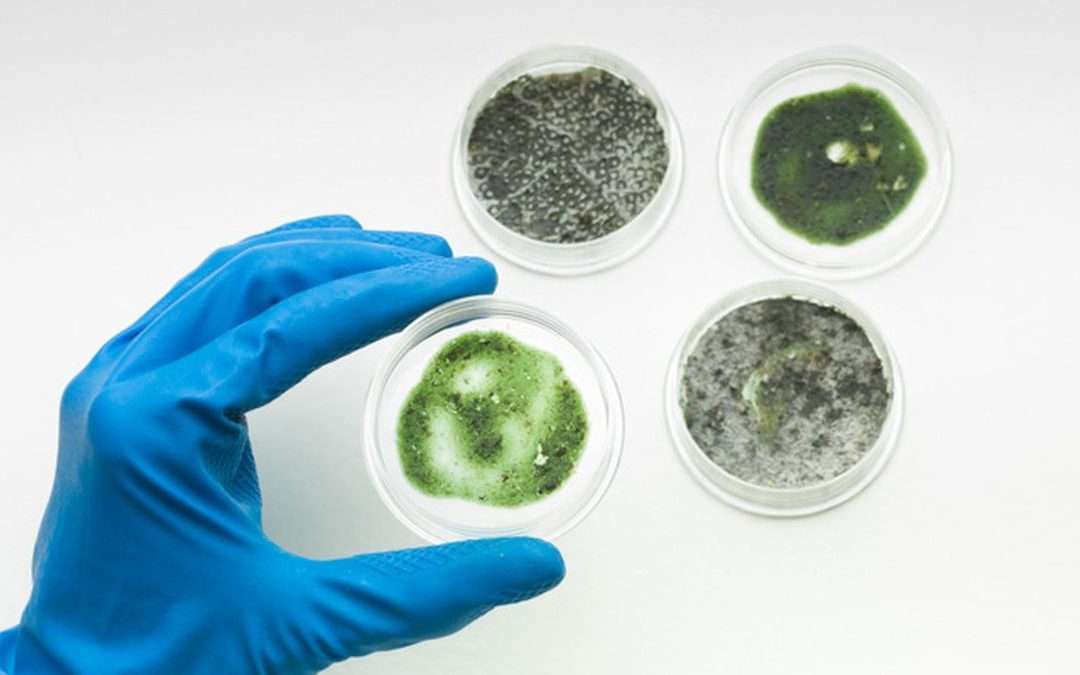
Air mold tests are accurate for the few minutes and the one room they sample, and not for the whole house. A pump pulls a known volume of air through a sticky cassette for a short time. A lab then counts the spores under a microscope.
Inspectors compare every indoor sample with an outdoor sample taken the same day. The comparison matters because, according to the CDC, there is always some mold around, indoors and outdoors. Indoor results that match the outdoor air point to normal background spores.
Different results from the two samples point to a source inside the home. That pattern is what the lab report is built to reveal. Spore counts also move during the day, which leads to the next question.
Why Do Air Test Results Change From Day to Day?
Air test results change from day to day because weather, airflow, and humidity push spore counts up and down. A bathroom fan, an open door, or a rainy afternoon can all shift a count. The sampled room matters as well.
Humidity plays a large part, since the EPA advises keeping indoor relative humidity below 60 percent, ideally between 30 and 50 percent. How mold gets in explains why timing a test around moisture events improves its value.
Repeat testing shows how steady a well-run test can be. A 2023 University of South Florida thesis on CDC Stacks took 1 outdoor and 3 indoor samples per location on 3 days. Only one sampling date was significantly different from the others, so the results were fairly consistent.
Consistent results still describe only the sampled room at the sampled time. Mold hidden out of reach raises a bigger accuracy problem.
Can a Mold Test Miss Hidden Mold?
A mold test can miss hidden mold, because spores trapped inside a wall may never reach the room air. Heavy, sticky spores such as Stachybotrys rarely go airborne. A clean air result therefore does not rule out mold.
According to the EPA, you should consider hiring an experienced professional when you suspect a hidden mold problem. That advice fits what the table showed: moisture meters and a thermal camera find damp materials that air sampling cannot reach. Even then, what inspectors cannot see still limits every method, including ours.
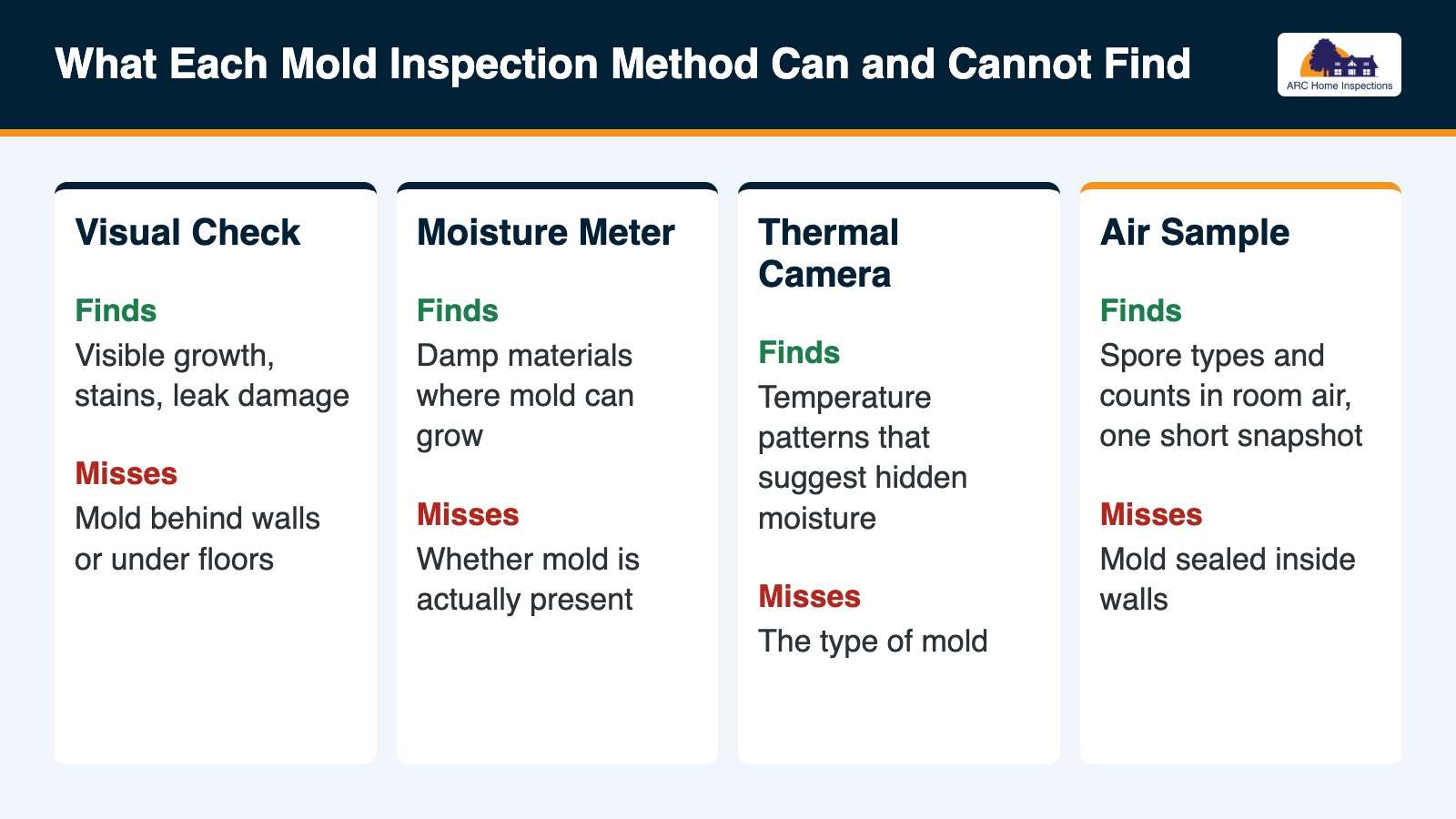
The comparison panel above shows why no single method covers every case. Do-it-yourself kits cover even less, which raises the question of whether they always read positive.
Do Home Mold Tests Always Come Back Positive?
Home mold tests do not always come back positive, but a do-it-yourself settle plate grows mold in almost any home. Spores exist in all air, so a plate left open collects some. The kit has no control over air volume, so the lab cannot separate normal background mold from a problem.
According to the EPA, mold sampling should be done by professionals with specific experience. Professional labs also follow analytical methods recommended by the American Industrial Hygiene Association. A store-bought kit skips both the outdoor comparison and the lab standards. A professional mold test includes both.
Even a professional sample produces a report that needs interpretation. No pass or fail number exists to make that easy.
Why Is There No Pass or Fail Number for Mold?
No pass or fail number exists for mold because the EPA has set no federal limits for mold spores. According to the CDC, there are no set standards for an acceptable quantity. NIOSH states that no health-based standards exist for mold or other biological agents in indoor air.
A lab report therefore lists spore types and counts rather than a verdict. The inspector reads those counts against the outdoor sample and the moisture findings. Experience shapes that reading, so how accurate is a mold inspection depends on the inspector as much as the instrument.
A good inspection report explains each reading in plain words. The next section covers how to read the results.
How Do You Read Mold Test Results?
Read mold test results by comparing the indoor spore types and counts with the outdoor sample taken the same day. Indoor spore types that differ from outdoors point to growth inside the home. Similar types and counts point to normal background mold.
Readings from moisture meters then confirm or challenge the lab numbers. High moisture in a room with elevated indoor spores strengthens the case for a source nearby. Normal moisture with matching spore counts usually closes the question for that room.
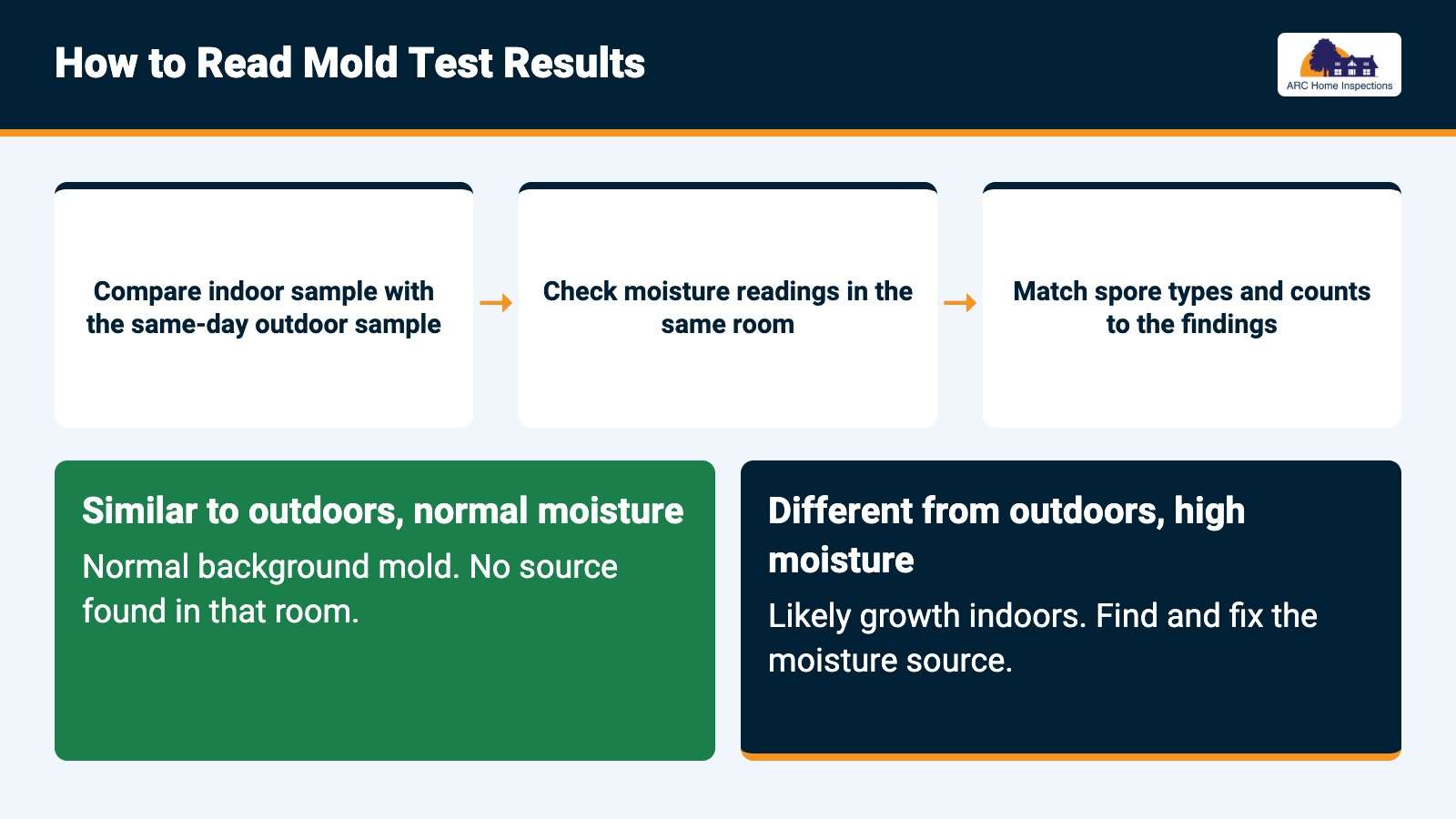
The flow above sums up the logic of a mold test report. Color and appearance play no part in it, which leads to a common question about toxicity.
Can You Tell If Mold Is Toxic by Looking at It?
You cannot tell if mold is toxic by looking at it, because color and texture do not show toxicity. The CDC says mold can look like spots of many different colors and can smell musty. Its guidance does not call black mold more dangerous than other types.
The CDC also says exposure to damp and moldy environments may cause a variety of health effects, or none at all. The CDC adds that you need to remove mold no matter what type is present. A lab can name the mold group, but the removal advice stays the same.
Many homeowners also confuse mold with mildew, and mold versus mildew is a fair question to settle early. Once the type stops mattering, the practical question is whether an inspection is worth doing.
Is It Worth Doing a Mold Inspection?
A mold inspection is worth doing when you suspect hidden moisture or smell mustiness without a visible source. A home sale can also call for a baseline. According to the EPA, sampling is unnecessary in most cases when mold is visible. The inspection earns its value when the cause is not obvious.
Three situations call for a professional look:
- A musty odor with no visible mold.
- A past leak, flood, or water stain behind a wall or ceiling.
- A cleanup that needs proof of success, since the EPA says surface sampling may help show an area was adequately cleaned.
A buyer can add testing to a buyers inspection to learn about moisture before closing. Water that dries within 24 to 48 hours of a leak or spill usually does not grow mold, according to the EPA. The EPA says people can often handle cleanup of an area under about 10 square feet. Larger areas call for the EPA’s remediation guide.
How Can You Make a Mold Test More Accurate?
Make a mold test more accurate by following six steps before and during sampling. Each step removes a source of error that distorts results. A professional air sampling visit already includes several of them. The steps below apply to any air test.
- Choose an inspector who investigates moisture first and samples second.
- Close windows and exterior doors before air sampling, as the inspector directs.
- Avoid cleaning, sweeping, or running fans in the test area beforehand.
- Request an outdoor sample taken the same day as the indoor samples.
- Sample the suspect area and one comparison room.
- Require lab analysis that follows American Industrial Hygiene Association methods.
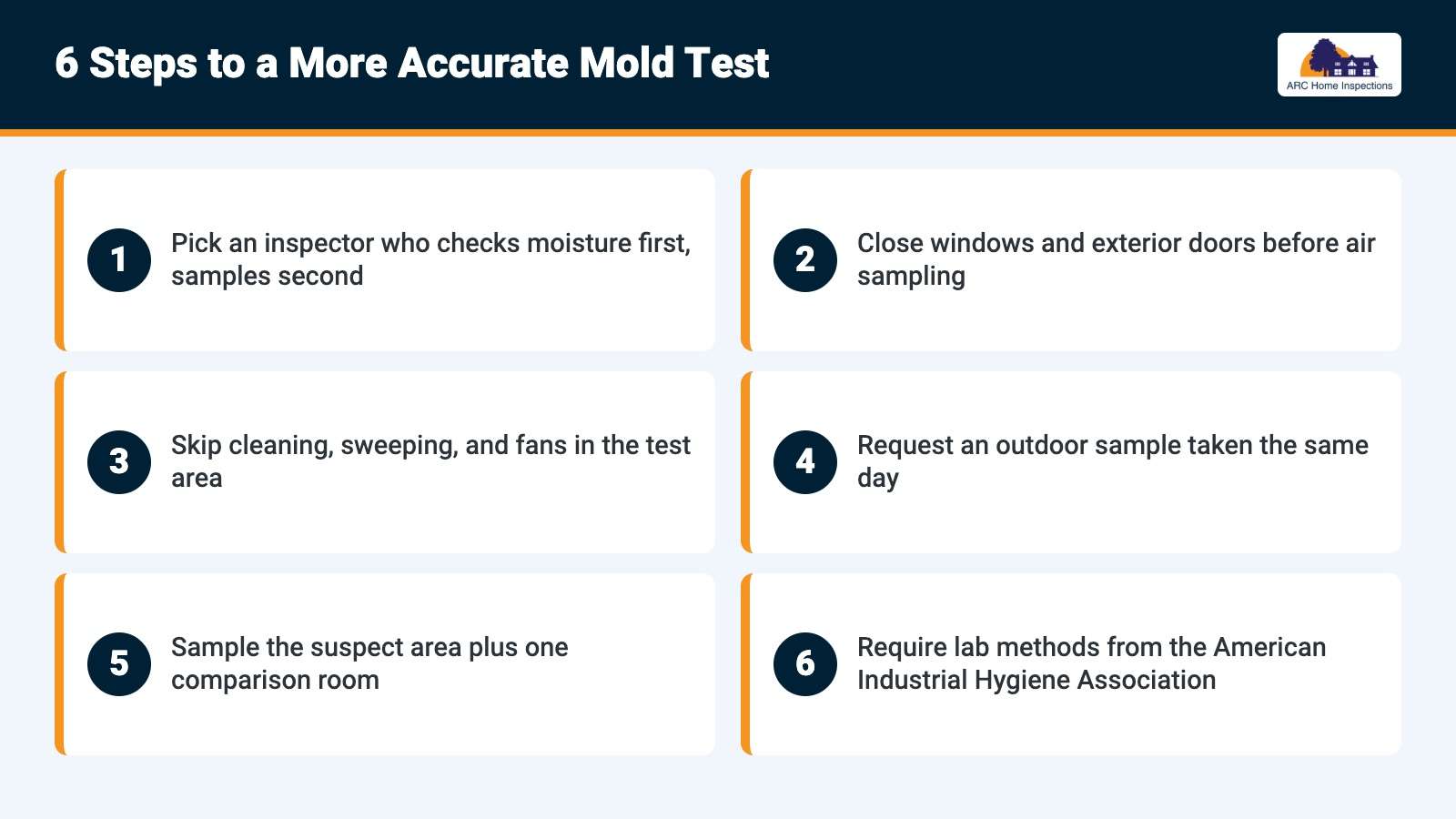
The checklist card above repeats the six steps in short form. The same checklist also helps you judge whether an inspector is reliable.
How Do You Spot an Unreliable Mold Inspector?
An unreliable mold inspector skips the moisture investigation and rests the whole verdict on a single sample. Watch for these warning signs:
- No outdoor sample for comparison.
- One indoor sample treated as proof of a whole-house problem.
- Claims that a mold is toxic based on color alone.
- A cleanup offer from the same company that produced the alarming result.
The last point is a conflict of interest. We perform mold testing only and do not perform mold remediation, so no cleanup work depends on what we find. Readers comparing providers can see who to call for questions to ask before booking.
What Else Should Buyers Know About Mold Test Accuracy?
Buyers should know that a general home inspection and a mold test answer two different questions about mold. The short answers below cover the points that matter in a real transaction.
Does a General Home Inspection Include Mold Testing?
A general home inspection does not include mold testing, because inspectors note visible mold and moisture clues without taking samples. A separate mold test adds lab evidence. Buyers who see stains or smell mustiness should add it before the inspection window closes.
Should You Retest After Mold Cleanup?
You should retest after mold cleanup when proof of success matters. The EPA says surface sampling may be useful to confirm an area was adequately cleaned. A clearance test compares the cleaned area with an outdoor baseline. The moisture source must also be fixed first.
Can Mold Come Back After Cleanup?
Mold can come back after cleanup when moisture returns, because the EPA says mold will not grow without water or moisture. The EPA adds that eliminating all mold and mold spores indoors is impossible. Controlling moisture is the lasting fix.
Frequently Asked Questions About Mold Inspection Accuracy
These short answers cover common questions about mold inspection accuracy that remain after the sections above.
Is Mold Testing a Scam?
Mold testing is not a scam when the inspector investigates moisture and takes an outdoor comparison sample. The inspector should also have no cleanup work to sell. Testing turns misleading when one sample is used to push an expensive remediation. Ask for the full method before you book.
How Many Air Samples Should Be Taken?
A typical mold air test takes one outdoor sample plus an indoor sample from each room of concern. The CDC Stacks study collected 1 outdoor and 3 indoor samples per location. More samples show how much normal variation exists.
Can Air Tests Detect All Types of Mold?
Air tests cannot detect all types of mold, because heavy, sticky spores such as Stachybotrys rarely go airborne. A surface sample or a moisture investigation catches what the air misses. A clean air result alone does not clear a damp area.
Should You Test If You See Mold?
You should not test if you see mold. The EPA says sampling is unnecessary in most cases when visible mold growth is present. Fix the moisture source and remove the growth instead. Testing helps when the cause stays unclear.
Can You Check for Mold Without Air Sampling?
You can check for mold without air sampling. According to the CDC’s NIOSH program, thorough visual inspections and musty odors are more reliable than air sampling. Moisture meters and thermal imaging then locate the damp source. Sampling is added only when the evidence calls for it.
How Can We Help With Mold Testing?
We help with mold testing by pairing moisture checks and thermal imaging with lab sampling when the evidence calls for it. The answer to how accurate is a mold inspection depends on the inspector, the method, and the moisture evidence behind each sample. At ARC Home Inspections, we report what we find and leave cleanup to others.
To book a mold test or ask about a specific room, call (314) 948-3058.