
You pay for a home inspection on or shortly after inspection day. That day follows the seller’s acceptance of your offer and falls well before closing. According to Opendoor, the buyer pays the inspector directly, typically $300 to $500, out of pocket. The fee is not a closing cost, and the lender does not roll it into the mortgage. Sellers pay only for a pre-listing inspection or a negotiated credit.
Key Takeaways
- The buyer pays the inspector directly, on or shortly after inspection day.
- The inspection follows an accepted offer, and NerdWallet advises allowing at least 7-10 days to complete it.
- A typical home inspection costs $300-$500, and larger homes cost more.
- A pre-offer inspection needs the seller’s permission, and the buyer pays even after losing the house.
- The fee stays separate from closing costs, repair negotiations and the earnest money deposit.
Do You Pay for a Home Inspection Before or After the Offer?
You pay for a home inspection after the offer is accepted, not before it. The buyer pays the inspector on or shortly after inspection day, according to Opendoor.
An inspection for buyers takes place inside the contract window, so the payment follows the signed offer. The inspector bills the buyer directly, and the seller never handles the fee.
Buyers who schedule a home inspection before or after offer acceptance still pay the inspector themselves. Only the timing and the risk change. A pre-offer visit needs the seller’s permission, while a post-offer visit sits under the purchase contract. The payment day itself needs a closer look next.
When Do You Pay for Home Inspection Fees?
You pay for home inspection fees on inspection day or shortly afterward, never at closing. A home inspection guide describes the fee as a separate, out-of-pocket expense paid directly to the inspector.
The inspection fee generally stays outside the closing bill, because the inspector collects it directly. The buyer keeps the receipt.
Payment methods vary by inspector. According to a home inspection guide, cards, Zelle and Venmo are common. A personal check may delay the report until it clears. Buyers who know the payment day can also plan the report release, and the steps below show how.
How to Pay for Home Inspection Fees in Four Steps
Pay for home inspection fees in four steps, from booking to report release. Each step fits inside the days between the accepted offer and the contingency deadline.
- Book the inspector right after the seller accepts your offer.
- Confirm the fee, the accepted payment methods and the due date before the visit.
- Pay on inspection day or shortly after, using the method the inspector accepts.
- Collect the written report once the payment clears.
Step four matters because a personal check may hold the report until it clears. A card or a payment app avoids that wait. The contingency deadline sets the pace for every step.
Is the Home Inspection Fee Part of Closing Costs?
The home inspection fee is not part of closing costs, because the buyer pays it directly to the inspector. The lender does not add the fee to the mortgage balance either.
A seller credit is possible, yet the buyer still pays the inspector first. The credit can lower what the buyer owes at closing, but the inspection bill stays separate.
Repairs follow a different path. Chase explains that who pays for repairs is guided by the contract. A buyer can negotiate repairs after the report arrives, yet that talk never changes who paid the inspector. The buyer carries the fee in a standard sale, so the next question is who should pay for a home inspection.
Who Should Pay for a Home Inspection, the Buyer or the Seller?
The buyer pays for a home inspection in a standard sale, and NAR states that buyers are typically responsible for the cost. NAR also states that home inspections are not required.
Chase reports that in many real estate transactions the potential homebuyer pays, while sellers may order a pre-listing inspection. The seller pays for a report that the seller orders.
HomeLight reports that about 95% of purchased homes go through an inspection. The buyer fee therefore counts as a standard purchase expense. We cover the full split between who pays for each inspection type in a separate post. The seller’s role comes next.
Does the Seller Ever Pay for a Home Inspection?
The seller pays for a home inspection only in two cases, a pre-listing inspection or a negotiated credit. Chase notes that sellers may order an inspection before they list.
A inspection before listing lets the seller learn about defects first and fix them before buyers arrive. The seller pays the inspector for that visit.
A negotiated credit works differently. The seller agrees to lower the buyer’s costs at closing, yet the buyer still pays the inspector. A re-inspection after repairs is a separate visit with its own fee. Cost questions come next.
How Much Does a Home Inspection Cost When You Pay?
A home inspection costs $300-$500 when you pay, according to Opendoor and NAR figures reported by Redfin. NerdWallet puts the average at about $400, citing the National Association of Realtors.
Home size moves the fee up or down. The table below shows the guide figures that Opendoor and HomeLight report.
| Home size | Reported fee | Source |
|---|---|---|
| Small condo | As low as $200 | Opendoor |
| Small home | $275-$300 | HomeLight |
| Typical home | $300-$500 | Opendoor, NAR |
| Large home, 3,000+ sq ft | $400 and up | HomeLight |
| Large home, 3,000+ sq ft | $500-$800 | Opendoor |
Square footage drives the fee, which explains why a condo costs less than a large house. Buyers can also read the average inspection cost breakdown before booking.
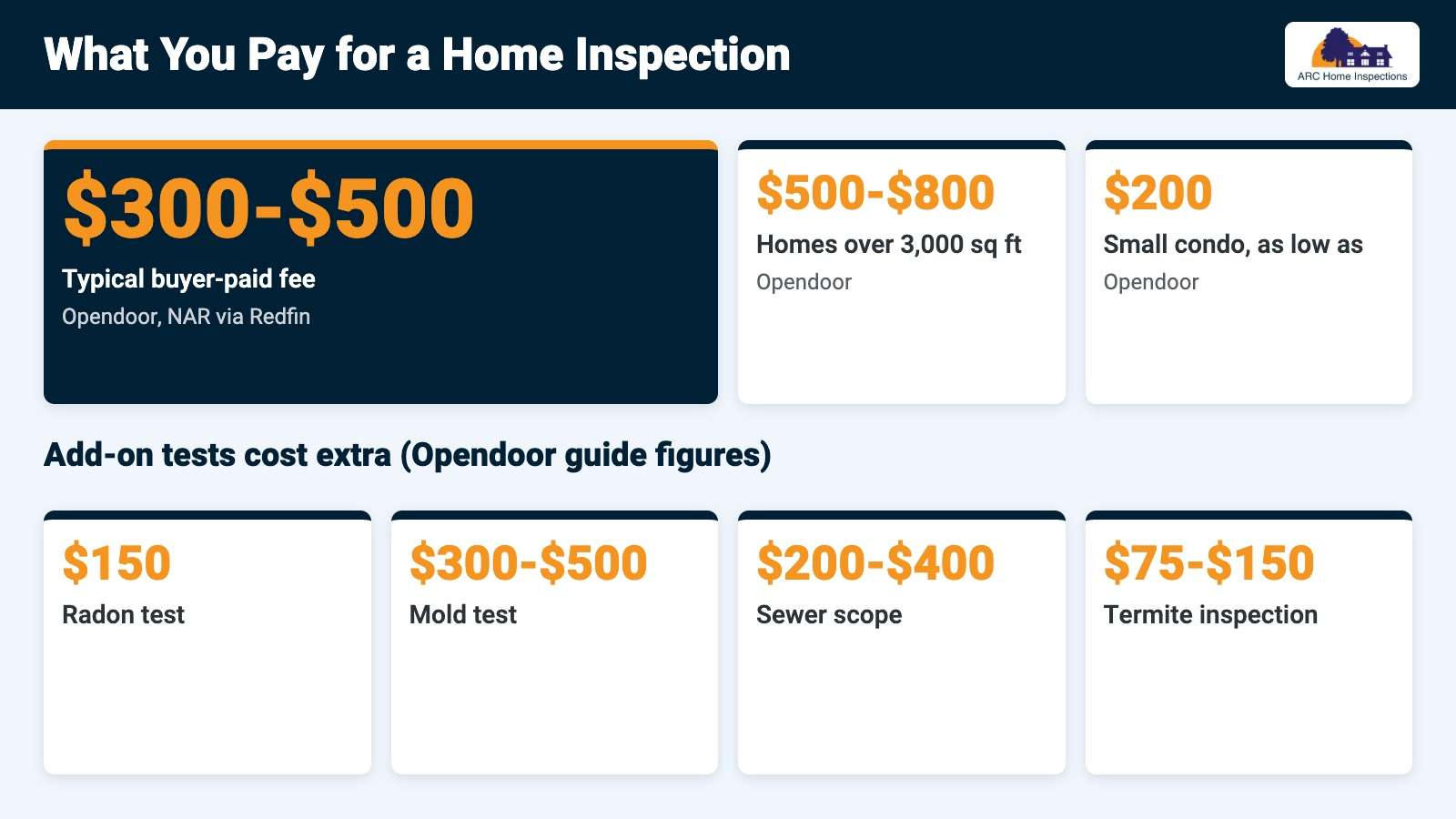
The graphic above sums up the base fee and the add-on figures that the next section explains.
Do You Pay Extra for Radon, Mold, and Well Water Tests?
You pay extra for radon, mold and well water tests, because each add-on test carries its own fee. Opendoor lists these guide figures:
- Radon test: about $150.
- Mold test: $300-$500.
- Sewer scope: $200-$400.
- Termite inspection: $75-$150.
A radon test checks indoor air for a gas that rises from the soil. We schedule add-on tests inside the same contingency window, so the buyer keeps one timeline.
A well water test applies to homes with private wells, while a septic inspection applies to homes with septic tanks. Buyers of rural homes should list those tests before the inspection date, so the lab results arrive before the deadline. A well water test needs lab time, which affects the deadline.
Termite rules differ by loan. Chase reports that since 2022 VA rules generally allow borrowers to pay for termite inspections, and VA encourages negotiating with the seller. A termite and WDO inspection therefore needs a payer named before the visit.
How Soon After an Accepted Offer Is the Inspection?
The inspection takes place soon after the offer is accepted, and NerdWallet advises allowing at least 7-10 days to complete it. The purchase contract sets the exact deadline.
A home inspection before or after contract signing follows the same payment rule, but the contract sets the clock. The inspection contingency gives the buyer a window to inspect, negotiate or exit.
The timeline below shows each step from offer to closing and marks the payment day.
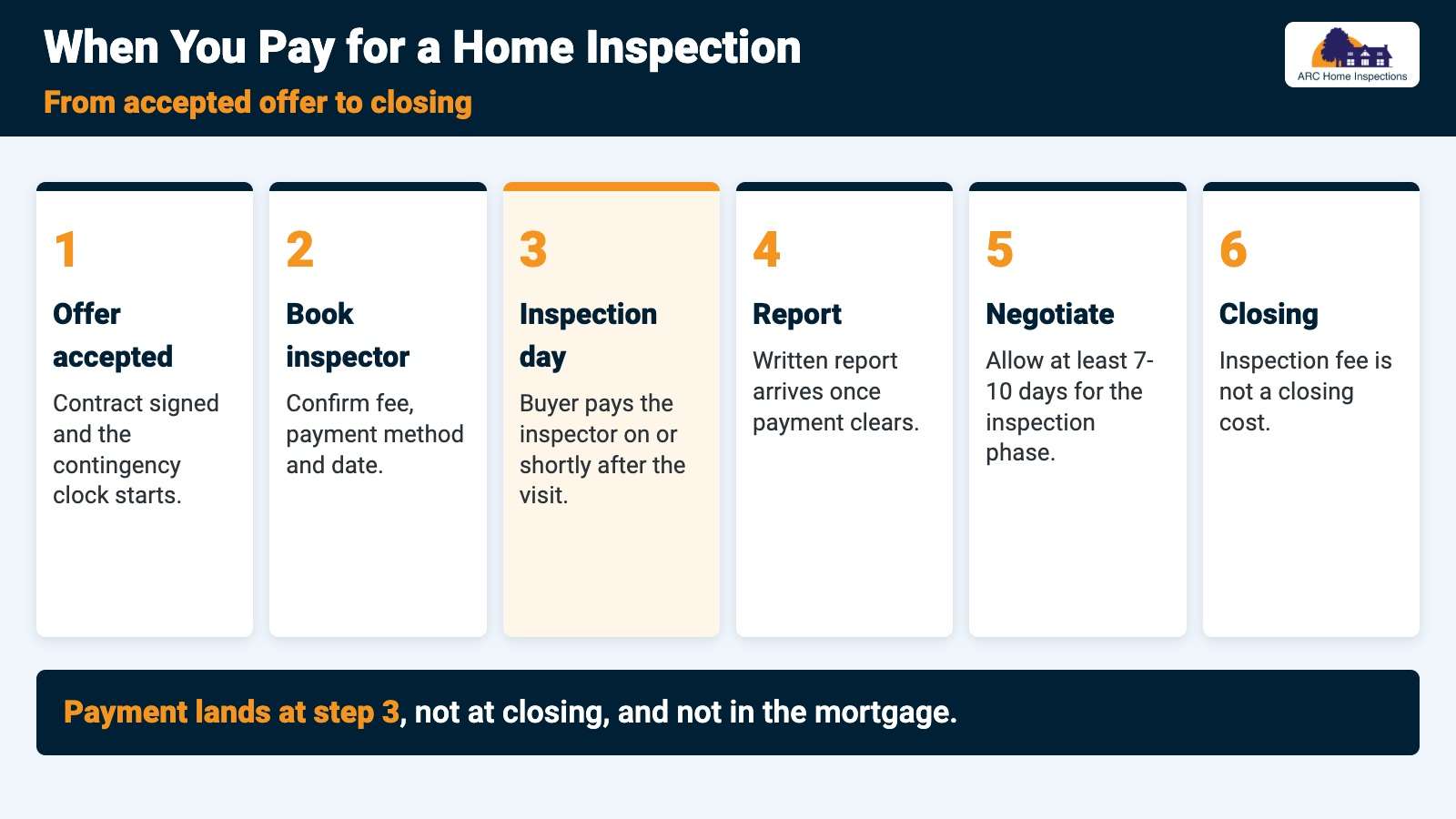
The timeline places payment at inspection day, well before closing. The findings then decide what happens to the deposit.
Do You Lose Earnest Money If the Inspection Fails?
You keep your earnest money when the inspection fails, provided the contract includes an inspection contingency and you act inside its deadline. Redfin explains that a buyer with that contingency can walk away without losing the deposit.
Earnest money typically ranges from 1% to 3% of the sale price, depending on the market, according to Redfin. The inspection fee is separate, so the buyer pays the inspector whether the deal continues or ends.
Buyers who consider whether to walk away should read the report before the contingency date. A missed date can put the deposit at risk. Some buyers want those answers earlier, which raises the pre-offer option.
Can You Inspect a Home Before Making an Offer?
You can inspect a home before making an offer, but only when the seller or listing agent grants access. An inspection industry guide states that the inspector needs the listing agent’s permission, usually for a 2-3 hour window.
A home inspection before or after offer submission carries the same inspector fee. The pre-offer buyer also carries the risk of losing the house. The buyer pays the inspector even when another buyer wins.
The inspector walks the property and writes a report for the buyer. The buyer pays for that report, not the seller or the listing agent.
The report lets a buyer price repairs into the offer and spot red flags before committing. The decision then turns on whether the report justifies the risk of paying and still losing the house.
Is a Pre-Offer Inspection Worth It?
A pre-offer inspection is worth the fee when the buyer plans a contingency-free offer. The report then replaces the contingency as protection.
NAR’s September 2026 REALTORS Confidence Index shows that 19% of buyers waived the inspection contingency. Those buyers can still learn the home’s condition before signing through a pre-offer inspection.
HomeLight describes an informational inspection as a full inspection with no right to back out. The graphic below compares a pre-offer inspection with a contingency inspection.
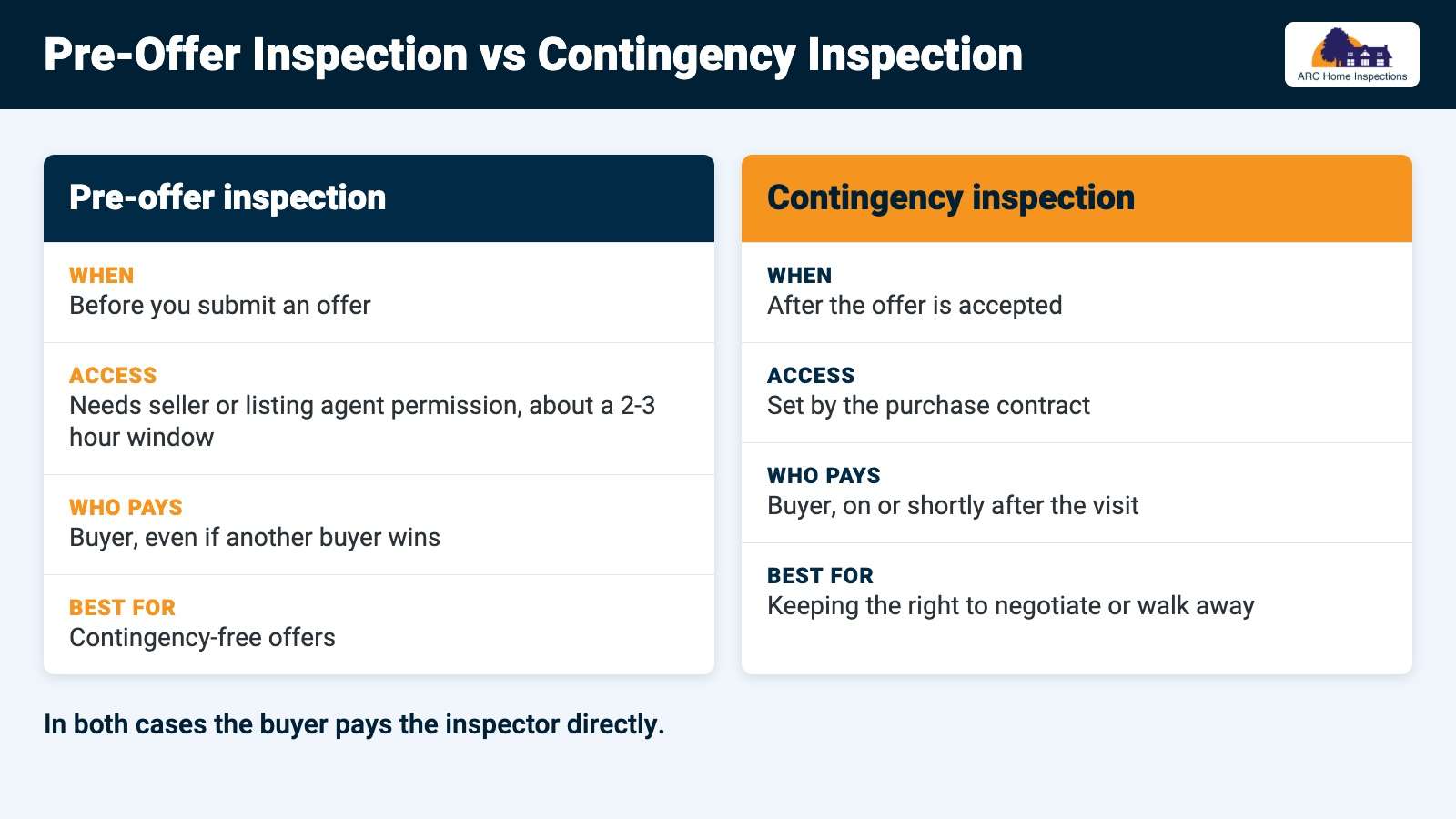
The comparison shows that the contingency route protects the deposit, while the pre-offer route strengthens the offer. Either way, preparation matters before the inspector arrives.
What to Do Before a Home Inspection
What to do before a home inspection starts with confirming access, utilities and payment. A short checklist keeps the visit on schedule.
- Confirm the fee, the payment method and the report timeline with the inspector.
- Ask the listing agent to keep water, power and gas on, so the inspector can test every system.
- Ask for clear paths to the attic, crawl space, electrical panel and water heater.
- Book any add-on tests, such as radon or well water, for the same window.
- Plan to attend the end of the visit and ask the inspector to explain each finding.
Buyers can review who should attend before the visit. The inspector then walks the buyer through the findings in person, which makes the written report easier to read.
What Else Should Buyers Know About Paying for Inspections?
Buyers should also know how appraisals, cash purchases and waivers affect inspection payments. Each topic changes who pays or whether the buyer inspects.
Does an Appraisal Replace a Home Inspection?
An appraisal does not replace a home inspection, because an appraisal estimates value while an inspection checks condition. The lender orders the appraisal, and the buyer still pays the inspector separately.
The difference between inspection and appraisal shows in what each report covers.
Do You Pay for an Inspection When Buying With Cash?
A cash buyer pays for the inspection as well, since the fee goes to the inspector and not to a lender. NAR states that home inspections are not required, so a cash buyer chooses whether to inspect.
What Happens When Buyers Waive the Inspection?
A buyer who waives the inspection contingency gives up the right to back out over the findings. The buyer may still pay for an informational inspection to learn the home’s condition.
The risks of skipping an inspection grow when the home is older or has a well or septic system.
Home Inspection Payment FAQ
Do Buyers Pay for Home Inspection Costs Before Closing?
Buyers pay for home inspection costs before closing, on or shortly after inspection day. The inspector collects the fee directly, and the closing statement does not list it.
Does the Buyer Pay for Home Inspection Fees Even After Backing Out?
The buyer pays the inspector even after backing out, because the fee covers the inspection already performed. Earnest money rules apply separately under the contract.
Do You Go Under Contract Before the Inspection?
You go under contract before the inspection in a standard purchase. The inspection happens during the contingency period that the signed contract creates.
Can You Negotiate an Offer After an Inspection?
You can negotiate after an inspection when the contract includes an inspection contingency. The buyer may request repairs, credits or a price change, and Chase notes the contract guides repairs.
Is It Normal for the Buyer to Pay for an Inspection?
It is normal for the buyer to pay for an inspection, and NAR and Chase both say the buyer usually pays. Sellers pay only for a pre-listing inspection or a negotiated credit.
Can You Pay for a Home Inspection by Card or App?
You can pay for a home inspection by card or app when the inspector accepts them. A home inspection guide reports that cards, Zelle and Venmo are common, so buyers should confirm the method when they book.
How Does ARC Home Inspections Help With Inspection Timing?
We schedule buyers inspections right after the offer is accepted and fit add-on tests into the same contingency window. Alan Redburn, a certified professional inspector, leads each visit.
A home inspection before or after offer acceptance is easiest to plan when the date is set early. We book home inspection for buyers across Missouri, and buyers can call (314) 948-3058 to line up the date.
The written report follows the visit, so buyers can use it before the contingency date. The team at ARC Home Inspections works to keep every date on that schedule.