
Yes, you should get a home inspection on a new construction home. Even brand-new homes can have construction mistakes that hide behind walls, under floors, and above ceilings. According to a 2022 survey by Real Estate Witch involving 1,000 new construction buyers, 65% of those who got an inspection found issues with their newly built homes. A separate study by Porch found that 86% of all home inspections reveal something that needs attention. New construction is not an exception to these numbers. An independent inspection gives buyers a professional, unbiased review of the home’s systems and structure before closing. This article explains why new builds still need inspections, what inspectors look for, how the process works, and how buyers in Mid-Missouri can protect their investment from day one.
Should I Do an Inspection on a New Build?
Yes, you should do an inspection on a new build. A new home involves dozens of subcontractors working on tight timelines, from the foundation crew to the framing team, electricians, plumbers, HVAC installers, roofers, and finish carpenters. With that many hands on a single project, small mistakes can happen at any stage. An independent inspection catches those issues before the buyer takes ownership.
According to research by LJP Construction Services, which studied more than 2,000 construction projects across 26 states, the average deficiency rate for new single-family homes in the United States is 3%. That may sound low, but across 1.1 million inspected assemblies, the study found 47,000 specific deficiencies, including life safety items. The most common problem areas were weather barriers, wood framing, mechanical systems, electrical and plumbing systems, and window and door installations.
Buyers building new homes in Cuba, Missouri and throughout Mid-Missouri should schedule an inspection as a standard part of their purchase process. A new construction inspection is not about distrust. It is about making sure every system in the home is installed correctly before you close. Alan Redburn, CPI, at ARC Home Inspections has the training and experience to evaluate new builds and give buyers the confidence they need to move forward.
Is a Home Inspection Worth It on a New Construction Home?
Yes, a home inspection is worth it on a new construction home. The average cost of a home inspection is approximately $343 to $400 depending on home size and location, according to data from HomeAdvisor and the National Association of Realtors. That small investment can save buyers thousands of dollars by catching issues before they become the homeowner’s responsibility.
According to the Real Estate Witch survey, 89% of new construction buyers dealt with premature repairs or maintenance after moving into their brand-new homes. The most common problems included HVAC systems (38%), safety-related issues (36%), plumbing (36%), and electrical systems (36%). Many of these issues could have been caught before closing with a thorough inspection.
Municipal code inspections are not a substitute for an independent home inspection. City and county inspectors check for minimum code compliance, but they do not perform the detailed, buyer-focused review that an independent inspector provides. According to Angi, municipal inspectors may spend only a few minutes at each phase of construction. An independent inspector works for the buyer, not the builder or the municipality, and takes a much more thorough approach.
ARC Home Inspections has written extensively about this topic. Buyers in Mid-Missouri who want more detail can review the full breakdown of whether a new construction inspection is worth it to see real examples of what gets found in new homes.
What Does a Home Inspector Look for in a New Build?
A home inspector looks for proper installation and function of every major system and structural component in a new build. This includes the foundation, framing, roof structure, exterior siding and flashing, windows and doors, electrical wiring and panel, plumbing supply and drain lines, HVAC equipment and ductwork, insulation, ventilation, grading and drainage around the foundation, and all interior finishes.
The inspector checks that outlets and switches are wired correctly and placed according to plan. They verify that plumbing fixtures have proper water pressure and that drains flow without leaks. They test the heating and cooling system to confirm it is sized correctly and performing as expected. They examine the roof for proper shingle installation, flashing, and ventilation. They walk the exterior looking for grading issues that could direct water toward the foundation rather than away from it.
According to the National Association of Home Builders, 25% of all homes in the United States will experience some type of structural defect during their lifetime, based on a review of 10,000 structural claims. An inspection at the new build stage gives the buyer a chance to identify and resolve structural concerns while the builder is still responsible. Buyers in Rolla, Jefferson City, and Owensville benefit from having a certified inspector review every accessible component before closing.
How Long Does a New Build Home Inspection Take?
A new build home inspection typically takes 2 to 4 hours, depending on the size and complexity of the home. A standard single-family home of 1,500 to 2,500 square feet usually takes about 2 to 3 hours. Larger custom homes with more systems, rooms, and features may require 4 hours or more.
After the on-site inspection, the inspector prepares a detailed report with photos, descriptions of each finding, and recommendations. Most inspection companies deliver the report within 24 hours. At ARC Home Inspections, clients receive a comprehensive report that includes photographs, written summaries, and access to the Create Request List (CRL) feature, which allows buyers to build a repair request document directly from the report.
Buyers should plan to attend the inspection when possible. Walking through the home with the inspector gives you a chance to see findings firsthand, ask questions, and learn about the systems in your new home. Builders in Sullivan, Union, and Washington generally accommodate scheduling for third-party inspections as a normal part of the construction process.
What Is the First Thing an Inspector Wants to See?
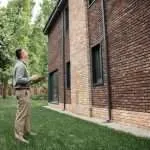
The first thing an inspector wants to see is the exterior of the home, starting with the foundation, grading, and drainage. Proper grading around the foundation is essential for directing water away from the structure. If water flows toward the house instead of away from it, it can cause moisture problems in the basement, crawl space, or foundation walls over time.
The inspector also checks the roof condition, siding installation, flashing around windows and doors, gutter placement, and the overall condition of the home’s exterior envelope. According to LJP Construction Services, exterior weather barriers are the most common area where deficiencies are found in new single-family homes. Getting this right during construction prevents moisture intrusion problems that can lead to mold, rot, and structural damage.
After the exterior review, the inspector moves inside to evaluate each room, system, and component systematically. Buyers in St. Clair, St. James, and St. Robert who schedule a new build inspection with ARC Home Inspections get a top-to-bottom evaluation that starts at the foundation and works through every level of the home.
Do Home Inspectors Check Every Room?
Yes, home inspectors check every accessible room in the home. This includes all bedrooms, bathrooms, the kitchen, living areas, laundry room, garage, attic space, basement or crawl space, and any utility rooms. In each room, the inspector looks at walls, ceilings, floors, windows, doors, outlets, switches, light fixtures, and any visible plumbing or HVAC components.
In bathrooms, the inspector checks for proper ventilation, tests the toilet, runs the shower and faucets, and looks for signs of moisture around fixtures. In the kitchen, the inspector tests appliances, checks under the sink for leaks, and confirms that outlets near water sources have ground fault circuit interrupter (GFCI) protection. According to ZipDo, electrical code violations are found in about 25% of home inspections, and missing GFCI outlets are one of the most common findings.
For new construction homes in Mid-Missouri, every room matters because finish work sometimes gets rushed toward the end of the build. An inspector who checks every room gives the buyer complete documentation of the home’s condition at the time of purchase. This documentation is valuable for warranty claims and future reference. A full overview of what a home inspection covers helps buyers know what to expect during the process.
Do Inspectors Check for Pests?
A standard home inspection includes looking for visible signs of pest activity, such as droppings, damaged wood, or mud tubes. However, a full pest or termite inspection is typically a separate service that requires specialized training and licensing. In Missouri, a wood-destroying organism (WDO) inspection is commonly requested during real estate transactions to check for termites, carpenter ants, and other wood-destroying insects.
Even new construction homes can be at risk for termite activity, especially in areas with high soil moisture. According to the National Pest Management Association, termites cause an estimated $5 billion in property damage annually in the United States. New homes built on previously untreated soil or near wooded areas may be especially vulnerable.
Buyers building or purchasing new homes in Farmington, DeSoto, Eureka, and across Mid-Missouri should consider adding a WDO termite inspection to their new construction inspection package. Early detection protects the investment and provides documentation that lenders and insurance companies may require. Learning about the signs of termite damage that most homeowners miss is also helpful for long-term home care.
Which Hazard Is Most Commonly Overlooked in Inspections?
Radon is the hazard most commonly overlooked in home inspections because it is invisible, odorless, and requires specialized testing equipment to detect. A standard home inspection does not include radon testing unless the buyer specifically requests it. According to the U.S. Environmental Protection Agency, radon is the second leading cause of lung cancer in the United States, responsible for an estimated 21,000 deaths per year.
Radon is a naturally occurring radioactive gas that seeps into homes through cracks in the foundation, gaps around pipes, and other openings in the lowest level of the home. It can accumulate to dangerous levels in any home, including brand-new construction. The EPA recommends that all homes be tested for radon, regardless of age or construction type.
New home buyers in Mid-Missouri should add radon testing to their inspection package. Missouri has areas with elevated radon levels, and testing during the inspection period gives buyers time to request a radon mitigation system from the builder before closing. ARC Home Inspections offers radon testing as an add-on service that can be completed alongside the new construction inspection. Learning about radon exposure helps every homeowner make informed decisions about indoor air quality.
Can I Say No to an Inspection?
Yes, you can say no to an inspection, but doing so is strongly discouraged. Waiving a home inspection removes your best opportunity to identify problems before you take legal and financial ownership of the property. According to a 2025 American Home Shield survey, nearly 1 in 4 homeowners waived their home inspection before purchase, and 23% of them regretted the decision. Among those who waived, 41% said it did not save them money in the long run.
Some buyers feel pressured to skip the inspection to speed up the closing process or to make their offer more attractive to the builder. This is a risky move. According to ZipDo data, buyers are 42% more likely to back out of a purchase when an inspection uncovers significant issues. That statistic shows how often serious problems are found, and it highlights the value of knowing about those problems before, not after, you own the home.
Buyers building new homes in Mid-Missouri should always include an inspection contingency in their purchase agreement. This protects your right to have an independent professional evaluate the home and gives you the option to request corrections before closing. First-time home buyers especially benefit from this step because the inspection process is also an education in how the home works.
What Happens if a New House Fails Inspection?
If a new house has issues found during inspection, the buyer shares the inspection report with the builder, who then has the opportunity to make corrections before closing. In most new construction contracts, the builder is responsible for addressing deficiencies that do not meet building standards or the agreed-upon specifications. The inspection report provides clear documentation of what needs attention.
According to the Real Estate Witch survey, among new home buyers who had an inspection, 32% found minor problems that did not delay closing, while 24% found issues significant enough to delay move-in plans. In nearly all cases, having a documented inspection report gave the buyer leverage to get problems fixed at the builder’s expense before taking ownership.
This process works best when the buyer has both a pre-drywall inspection and a final inspection. The pre-drywall inspection catches hidden issues while walls are still open. The final inspection checks the finished product. Together, they give the buyer two opportunities to identify and resolve concerns during the construction timeline. Knowing how to work through inspection findings helps buyers approach the process with confidence.
What Causes a House to Not Pass an Inspection?
A house does not technically “pass” or “fail” a home inspection the way it would a code inspection. A home inspection is an evaluation, not a pass-fail test. The inspector documents the condition of the home and identifies any deficiencies, safety concerns, or items that do not meet standard building practices. The buyer then decides how to proceed based on the findings.
Common issues that concern buyers the most include structural deficiencies, active water intrusion, electrical problems, plumbing leaks, HVAC installation errors, and missing insulation. According to ZipDo, the top five issues found during home inspections are electrical problems, plumbing issues, roofing defects, HVAC concerns, and foundation trouble. About 70% of all home inspections reveal some type of repair or maintenance item.
For new construction, the most common findings tend to be related to finish quality, incomplete punch list items, and minor system installation issues that the builder can easily correct. A thorough inspection gives the buyer confidence that all items are addressed before they move in. Homeowners in Vienna, Lebanon, and Waynesville who want to understand the full scope of what gets evaluated should review a Missouri home inspection checklist to see every component that a certified inspector covers.
New Construction Inspection: What Gets Checked and Why It Matters
| System or Component | What the Inspector Evaluates | Why It Matters |
| Foundation and grading | Cracks, settling, drainage slope, waterproofing | Prevents water intrusion and structural damage over time |
| Roof | Shingle installation, flashing, ventilation, gutters | Roof issues appear in about 35% of inspections (ZipDo) |
| Electrical system | Panel, wiring, outlets, GFCI protection, grounding | Electrical fires cause an estimated 51,000 fires per year (ESFI) |
| Plumbing | Supply lines, drains, fixtures, water heater, water pressure | About 30% of homes have some form of plumbing leak (ZipDo) |
| HVAC | Heating, cooling, ductwork, thermostat, airflow | HVAC issues are among the top 5 inspection findings nationally |
| Insulation and ventilation | Attic insulation depth, vapor barriers, bath and attic vents | Nearly 50% of inspections find insulation or ventilation issues (ZipDo) |
| Windows and doors | Proper sealing, operation, flashing, energy efficiency | Window and door defects are a top deficiency area (LJP Construction) |
| Interior finishes | Drywall, paint, flooring, trim, cabinets, countertops | Finish quality issues are among the most common new build findings |
Sources: ZipDo, Electrical Safety Foundation International (ESFI), LJP Construction Services, Real Estate Witch
Does My House Have to Be Clean for an Inspection?
No, your house does not have to be spotless for an inspection, but it does need to be accessible. The inspector needs clear access to the electrical panel, water heater, HVAC equipment, attic access, crawl space or basement, and all rooms. For new construction, the builder should make sure that construction debris is cleared and that all systems are operational before the inspection takes place.
The inspector is not evaluating cleanliness or décor. They are evaluating the function and condition of the home’s systems and structure. As long as the inspector can safely access each area and component, the inspection can proceed as planned.
For new builds in Mid-Missouri, the builder typically coordinates with the inspector to make sure the home is ready for evaluation. ARC Home Inspections works with builders across Cuba, Rolla, Jefferson City, and surrounding communities to schedule inspections at the right time in the construction process without causing delays.
Frequently Asked Questions
Does ARC Home Inspections Offer New Construction Inspections in Mid-Missouri?
Yes, ARC Home Inspections offers new construction inspections across Mid-Missouri, including Cuba, St. James, Rolla, Jefferson City, Owensville, Union, Washington, St. Clair, Sullivan, and surrounding areas. Services include pre-drywall inspections and final buyer inspections. Clients receive detailed reports with photos and written findings within 24 hours.
How Many Inspections Should I Get on a New Construction Home?
At minimum, buyers should get a pre-drywall inspection and a final inspection before closing. The pre-drywall inspection reviews hidden systems while walls are still open. The final inspection evaluates the finished home. Some buyers also add a foundation inspection at the start and an 11-month warranty inspection before the builder’s one-year warranty expires. Each phase provides an extra layer of protection.
Will the Builder Fix Issues Found During the Inspection?
In most new construction contracts, the builder is responsible for correcting deficiencies found during the inspection. The inspection report serves as documentation that the buyer can share with the builder to request corrections. According to the Real Estate Witch survey, the majority of new home buyers who had inspections were able to get issues addressed before closing.
Is a Municipal Code Inspection the Same as a Home Inspection?
No. Municipal code inspections check for minimum code compliance at specific construction phases. They are typically brief and focus on whether the work meets the legal minimum requirements. An independent home inspection is much more thorough, evaluates the home from the buyer’s perspective, and covers craftsmanship, function, and long-term durability beyond just code compliance.
Can I Use the Inspection Report for Warranty Claims Later?
Yes. The inspection report provides a documented baseline of the home’s condition at the time of purchase. If issues develop later, this report can support warranty claims by showing the condition of each system when the home was new. Keeping the report on file alongside all maintenance records is a smart long-term strategy. ARC Home Inspections delivers reports that include photos, videos, and detailed descriptions for easy reference.
Should I Add Radon or Mold Testing to My New Construction Inspection?
Yes. Radon testing and mold testing are valuable add-on services for any new home. Radon is an invisible, odorless gas that can accumulate in any home, including new construction. The EPA estimates that radon causes about 21,000 lung cancer deaths per year in the United States. Missouri has areas with elevated radon levels, making testing especially important for Mid-Missouri buyers.
How Soon After Closing Can I Schedule a Warranty Inspection?
Most builders offer a one-year warranty on new construction homes. Buyers should schedule a warranty inspection around the 11-month mark, before the warranty expires. This inspection identifies any issues that developed during the first year of living in the home so you can request repairs while the builder is still responsible. ARC Home Inspections offers re-inspection services that are ideal for this purpose.
Final Thoughts
Getting a home inspection on a new construction home is one of the smartest decisions a buyer can make. New does not mean perfect, and the data proves it. With 65% of new construction inspections uncovering issues and 89% of buyers dealing with premature repairs after move-in, the value of an independent inspection is clear. For buyers building in Cuba, Rolla, Jefferson City, and throughout Mid-Missouri, a professional inspection provides peace of mind, documented protection, and the confidence that your new home is built right.
ARC Home Inspections provides thorough new construction inspections, including pre-drywall inspections and final buyer’s inspections, for new homes across Mid-Missouri. Contact ARC Home Inspections today at (314) 948-3058 to schedule your inspection and protect your investment from the very beginning.